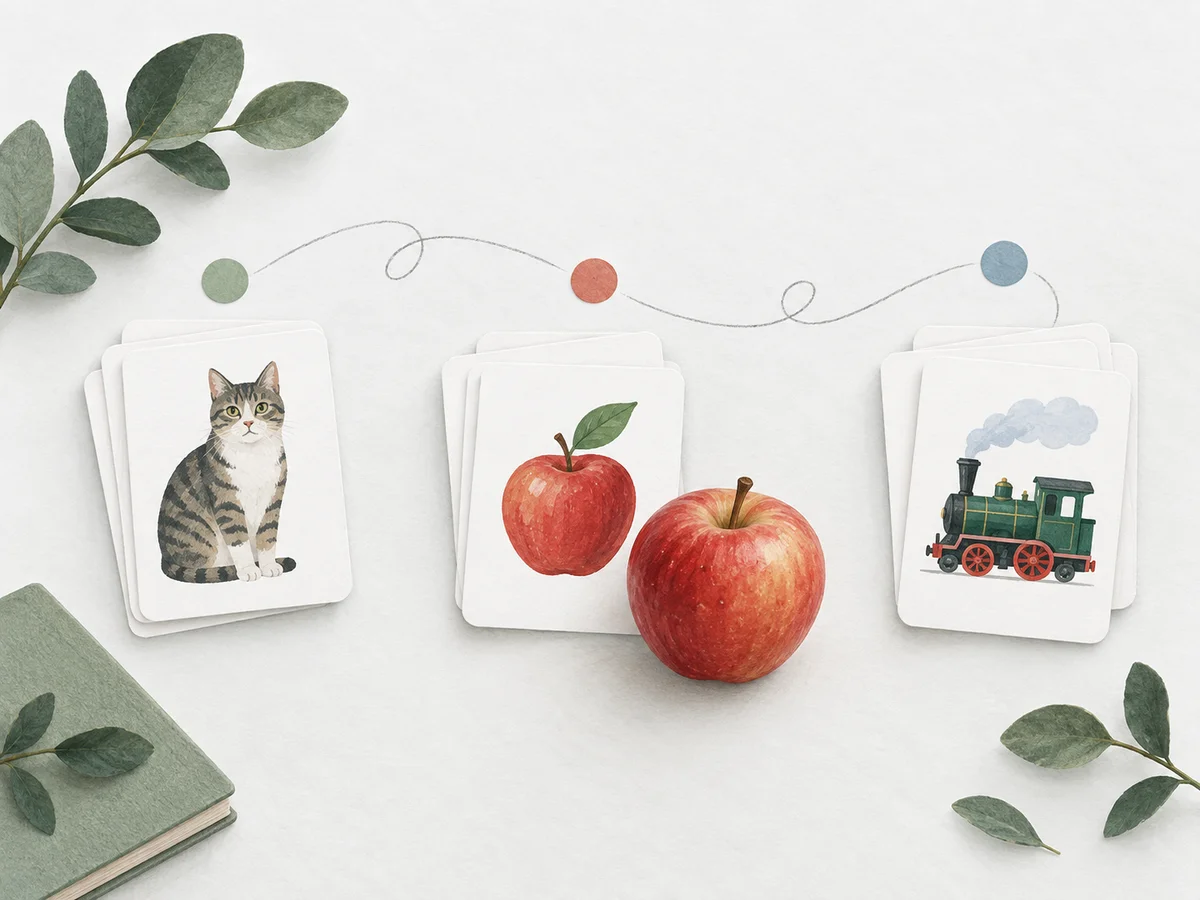
Reconocer una imagen conocida no es lo mismo que recordar una palabra sin ayuda. Un niño puede nombrar al gato de una tarjeta y no reconocer otro gato en una fotografía. Por eso, contar las tarjetas vistas no basta para saber qué ha aprendido.
Las tarjetas pueden ser útiles si se practica con ellas, no solo si se miran. Esta es una versión resumida. El artículo completo en inglés también analiza estudios sobre aprendizaje de palabras en preescolares y transferencia a otras situaciones.
Recordar antes de comprobar
La recuperación activa consiste en intentar responder antes de ver o escuchar la respuesta. En el experimento de Karpicke y Roediger (2008), recuperar repetidamente palabras ya aprendidas mejoró su recuerdo posterior. Los participantes eran estudiantes universitarios, no niños de preescolar.
Con una tarjeta de un animal se puede tapar la palabra e intentar nombrarlo antes de reproducir el audio. Pero primero hay que enseñar una palabra nueva. Ante una dificultad, ofrezca un modelo o una pista.
Volver después de una pausa
La práctica espaciada distribuye el aprendizaje entre distintas ocasiones. El metaanálisis de Cepeda y sus colaboradores (2006) muestra que los intervalos adecuados también dependen del tiempo durante el que se pretende recordar.
No existe un calendario universal. Aprender unas pocas palabras, volver a ellas otro día y comprobarlas más adelante es un posible punto de partida, no un programa validado para un niño concreto.
La revisión de Dunlosky y sus colaboradores (2013) consideró de alta utilidad la práctica de recuperación y la práctica distribuida. Eso respalda los métodos, no cualquier aplicación de tarjetas.
Cómo practicar con tarjetas ilustradas
- Elija pocas palabras que tengan utilidad en la vida cotidiana.
- Muestre, explique y nombre la imagen antes de pedir una respuesta.
- Tape la palabra, permita una respuesta alcanzable y después compruébela.
- Vuelva al material tras una pausa. Simplifique la tarea si las dificultades persisten.
- Busque otro ejemplo: una fotografía, un objeto o una acción.
Para aprender «manzana», relacionar la tarjeta con una manzana en la cocina permite ir más allá de una sola ilustración.
Tarjetas para personas autistas
Los estudios citados no demuestran la eficacia de Tevuki para personas autistas. Las tarjetas son materiales educativos complementarios, no un tratamiento del autismo ni un sustituto del apoyo a la comunicación.
Tenga en cuenta los intereses, las preferencias sensoriales y la forma habitual de comunicación. No exija respuestas habladas ni contacto visual para participar. Hablar, señalar o utilizar un sistema de comunicación plantean demandas distintas; no son medidas equivalentes de recuperación. Modifique o detenga una actividad que cause malestar.
Qué ofrece Tevuki actualmente
El catálogo gratuito contiene ilustraciones, audio en cuatro idiomas y PDF imprimibles, con temas como animales, transporte y emociones.
El catálogo público no programa repasos automáticamente, no evalúa respuestas ni sigue el dominio de conceptos. Usted o la persona que aprende organiza la práctica. La evidencia se refiere a los principios descritos, no a una validación clínica de Tevuki.